Non-Runner Car Transport: How to Prepare a Vehicle for Recovery
A car that does not start can still be transported safely. The key is describing exactly how it rolls, steers and loads before the truck arrives.
A non-running vehicle may have a flat battery, engine failure, gearbox fault, accident damage or missing components. It can usually be transported, but the recovery team needs to understand how the vehicle will move before sending a truck. Correct information is the difference between a smooth collection and a failed loading attempt.
What does non-runner mean?
"Non-runner" only tells the operator that the engine cannot drive the vehicle. It does not explain whether the car rolls, steers, brakes or selects neutral. Those details decide which loading method and equipment are required.
The essential condition checklist
- Keys: Are the keys present and recognised by the vehicle?
- Neutral: Can the gearbox be placed in neutral?
- Handbrake: Does the handbrake release fully?
- Rolling: Do all four wheels rotate?
- Steering: Does the steering unlock and turn?
- Tyres: Are the tyres inflated and attached to usable wheels?
- Suspension: Is any corner collapsed or damaged?
- Access: Is there space for a recovery truck and a straight winch line?
Send photographs from every side when there is accident damage or a suspected wheel problem. A short video showing whether the vehicle rolls can also help.
Automatic and electric vehicles
An automatic car that cannot select neutral may need wheel skates or dollies to move without dragging the driven wheels. Electric vehicles can be heavier than similar petrol cars and may have manufacturer-specific towing requirements. Tell the operator that the vehicle is electric or hybrid and provide the exact model.
Loading methods for non-runners
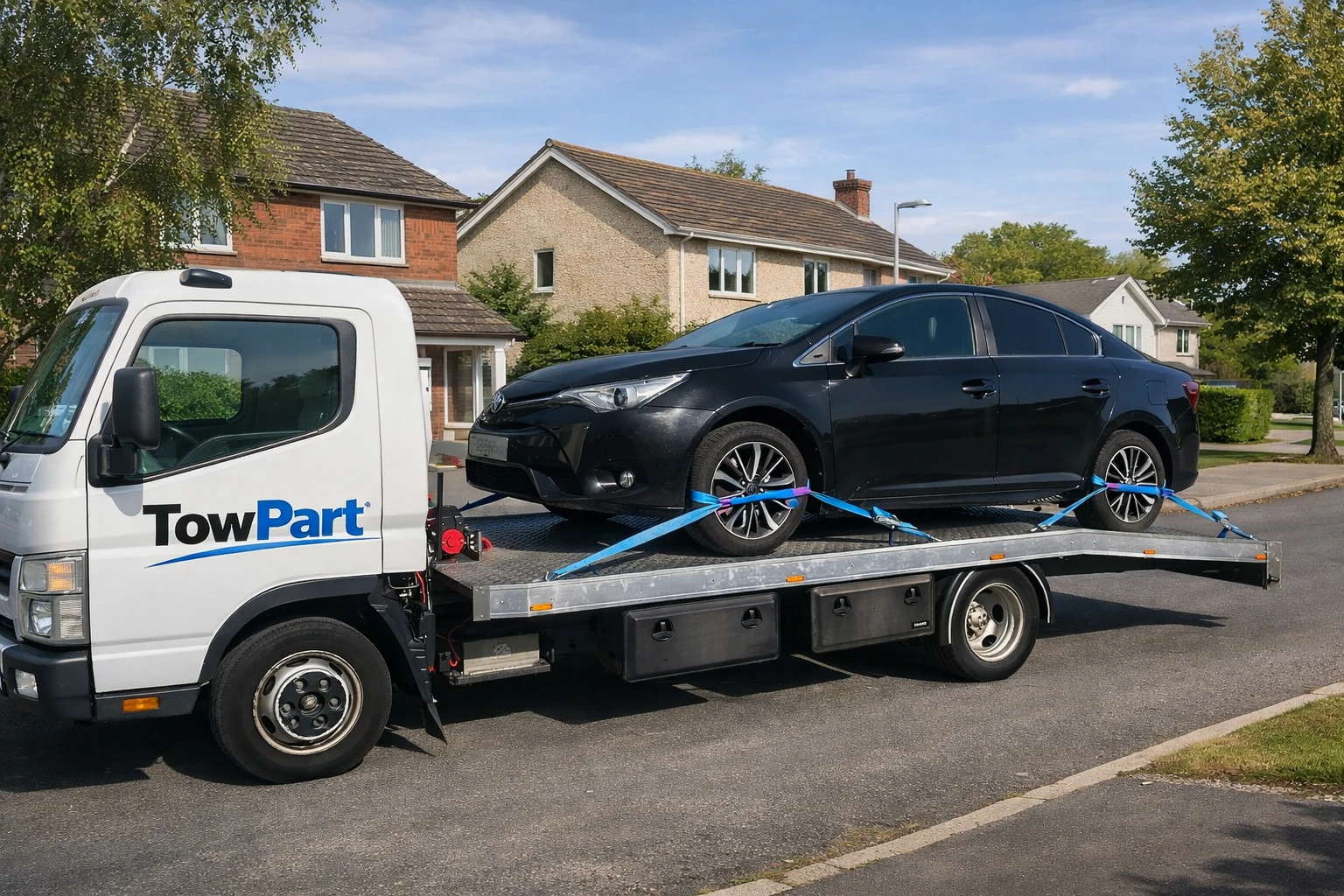
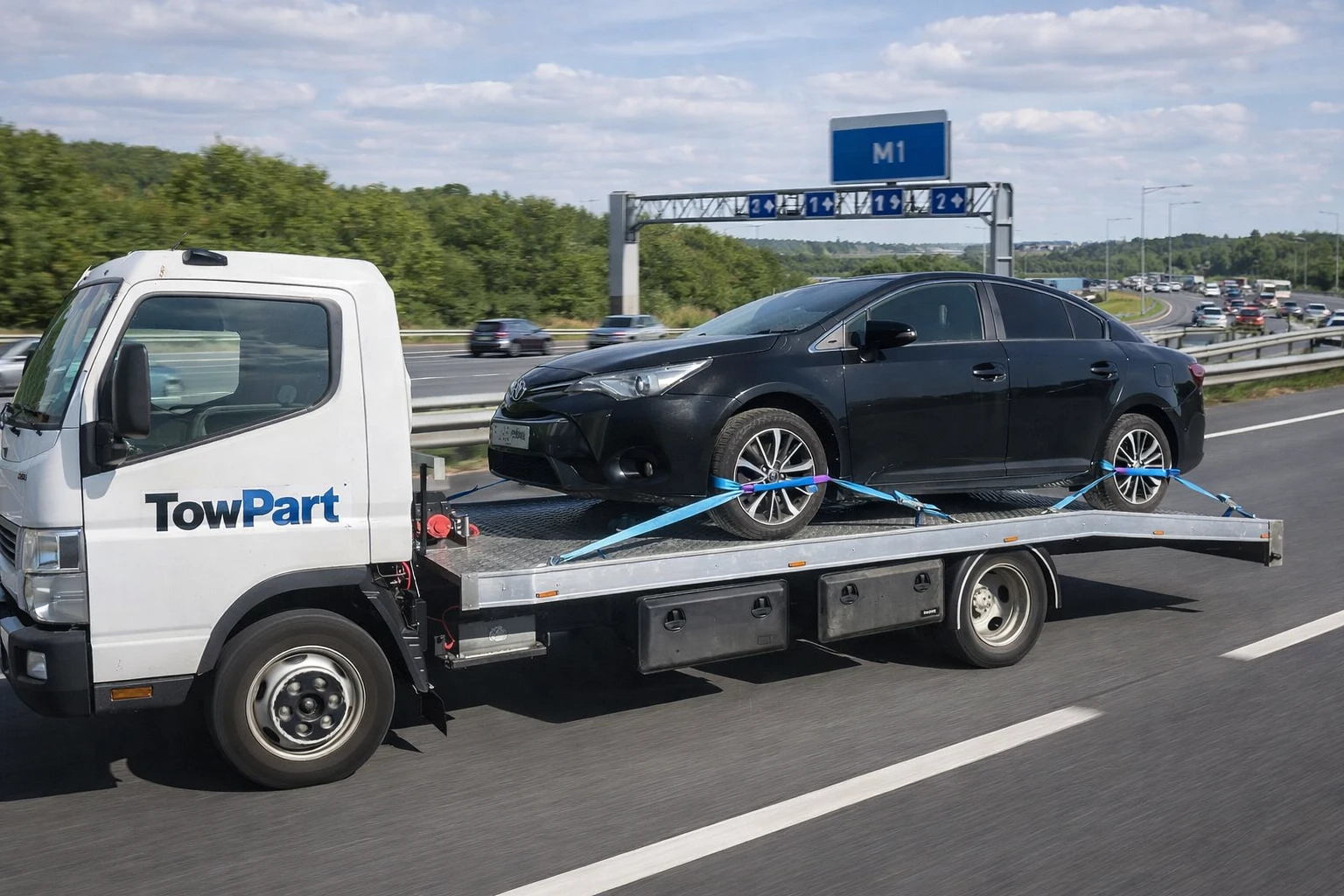
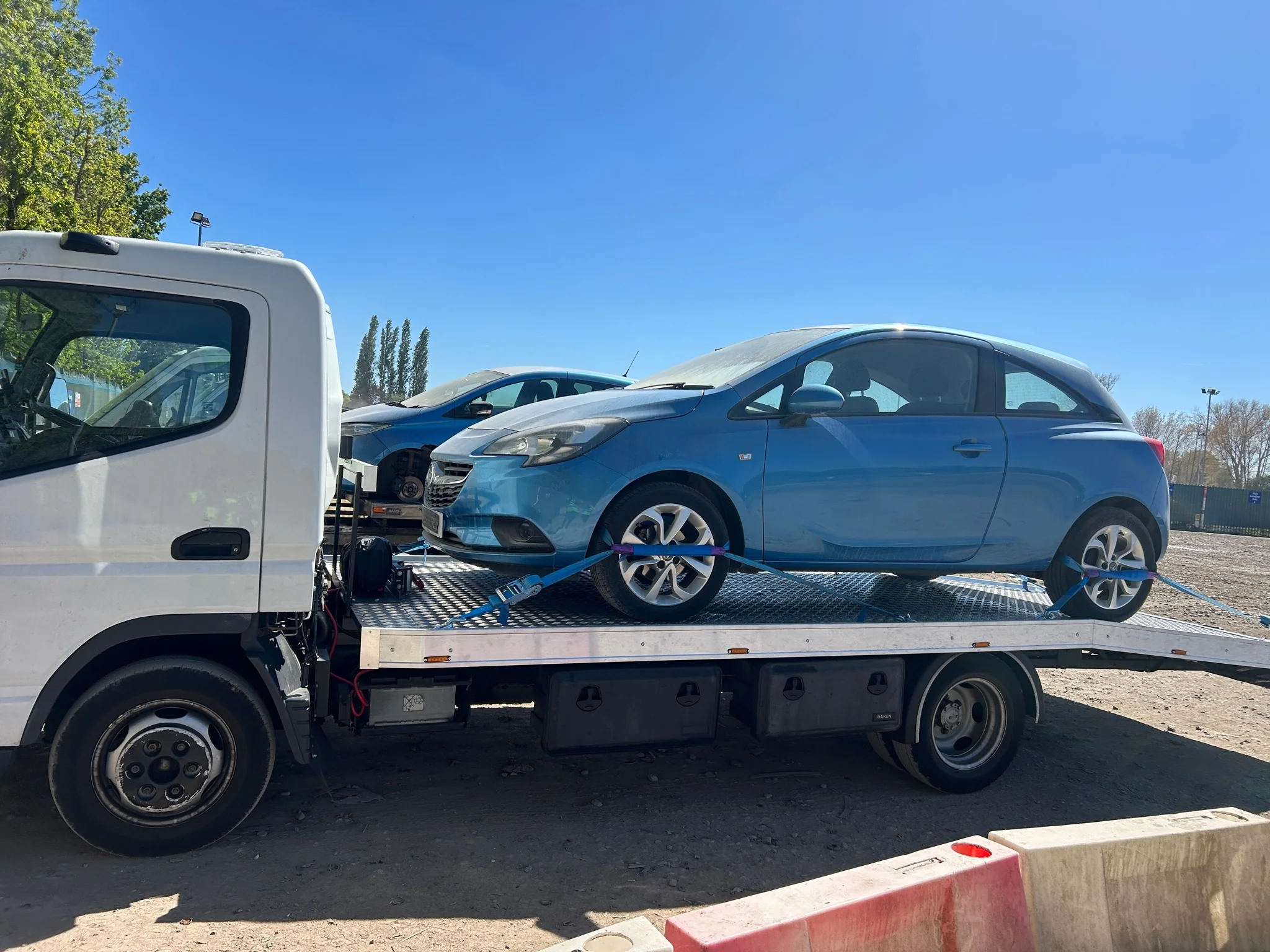
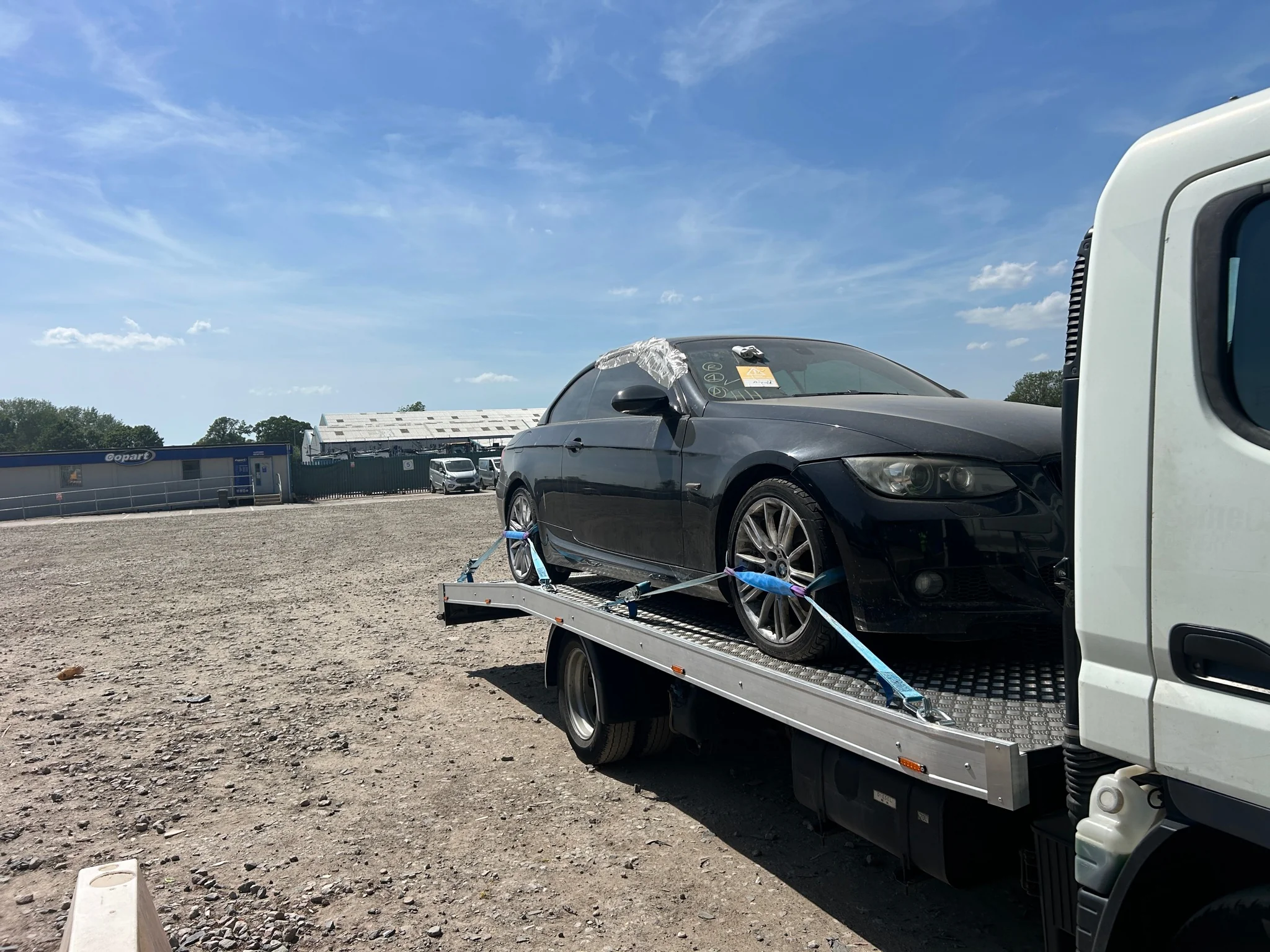
A flatbed recovery truck normally uses a winch to pull the vehicle onto the bed. If one or more wheels are locked, skates may be placed under them. Vehicles with severe suspension damage, missing wheels or restricted access may need specialist equipment. Never hide loading problems to obtain a cheaper quote: the wrong truck may be unable to collect the vehicle.
Preparing the collection point
Remove loose belongings, make the keys available and ensure the vehicle is accessible. If it is inside a multi-storey or underground car park, provide the height restriction and ramp details. If it is on private land, confirm permission for the truck to enter. For roadside vehicles, share a precise location and describe nearby hazards.
What affects the transport price?
The journey distance is important, but so are vehicle weight, loading time, locked wheels, access and the equipment required. Provide collection and delivery postcodes plus the full condition checklist to receive an accurate quote.
For auction purchases, use our auction collection checklist. For emergency roadside help, read the breakdown recovery guide.
Tell us whether it rolls, steers, goes into neutral, releases the handbrake and has wheel damage. TowPart will check the right truck and confirm the quote.
Get a non-runner transport quote ↗COMMON QUESTIONS
Useful answers.
Can you transport a car with locked wheels?+
Often, yes. Wheel skates or specialist loading equipment may be required, so state which wheels are locked before booking.
Does the car need keys?+
A vehicle can sometimes be recovered without keys, but locked steering, an electronic handbrake or an automatic gearbox may change the equipment needed.
Can a non-runner be collected from a car park?+
Possibly. Provide the height limit, ramp, turning space and exact parking position so access can be assessed.