Car Stuck in Mud or a Ditch? A Guide to Safe Winch Recovery
Repeated wheelspin can make a stuck vehicle harder to recover. Stop, assess the ground and send the right photos before arranging a controlled pull-out.
TowPart recovery team8 min read
TowPart-approved driversTrained recovery drivers and technicians
Fully insured recovery trucksSuitable equipment checked for your vehicle
24/7 trained teamDay, night, weekends and bank holidays
No membership neededBook the help you need, when you need it
24/7Trained team available
3 minStandard quote guarantee*
15 minArrival where available*
500+Recovery driver network
£0Annual membership needed
*Subject to a suitable local truck being available, safe access and traffic conditions. The team confirms your actual ETA before dispatch.
FROM OUR RECOVERY TRUCKS
Recent recovery work.
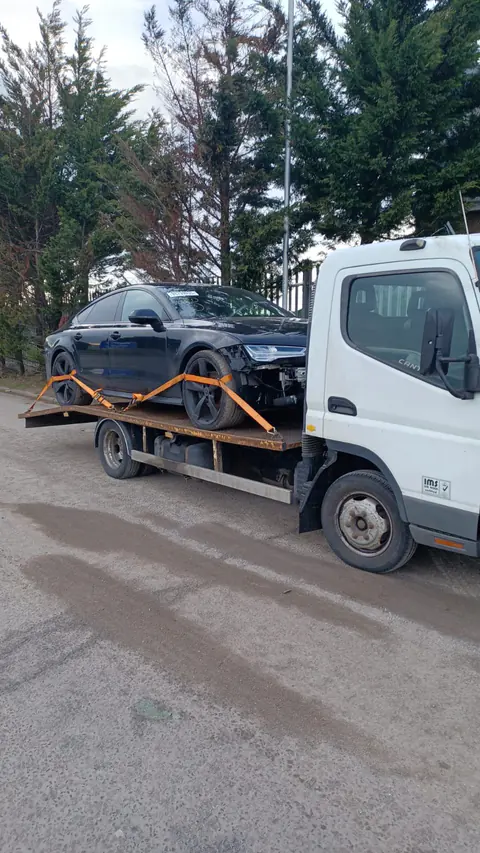
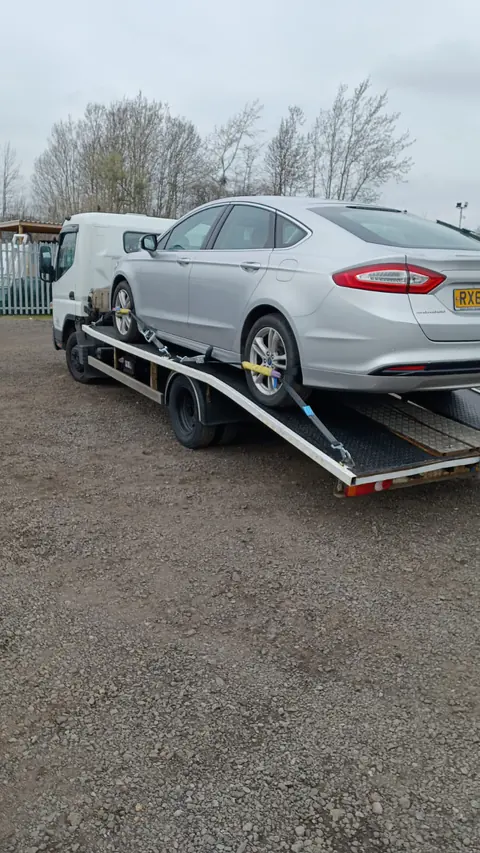
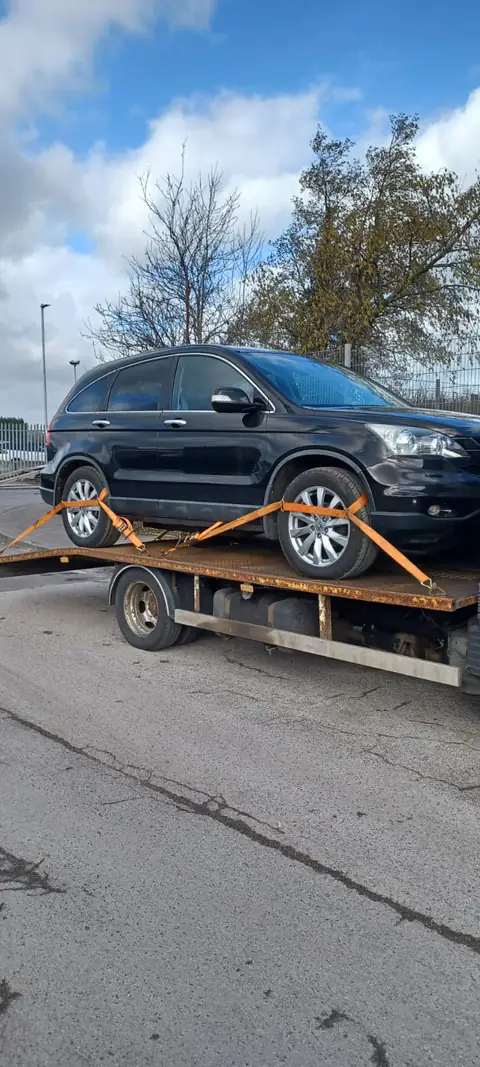
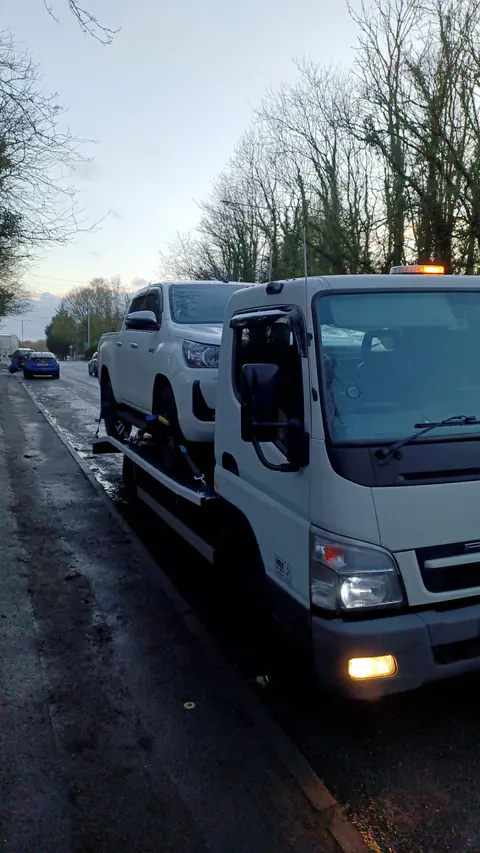
A closer look at the cars, SUVs and pickups we’ve transported.
8 vehicles. One careful approach.
01
ELECTRIC VEHICLE
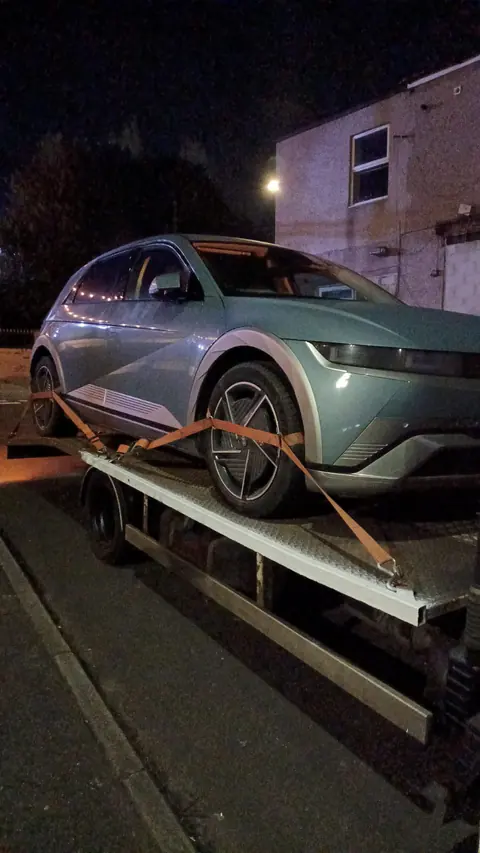
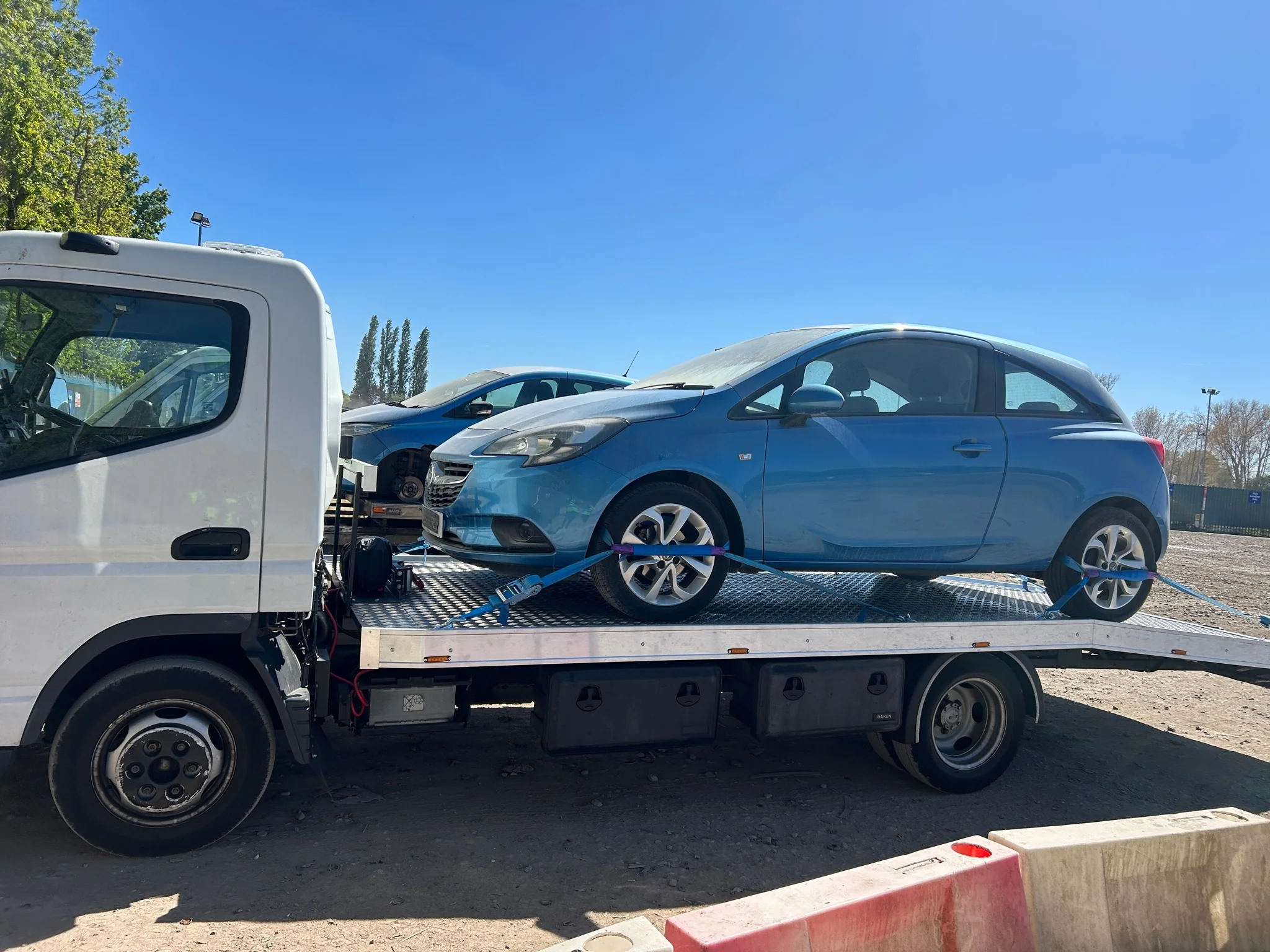
Electric Car Recovery at Night
Hyundai Ioniq 5, loaded after dark.
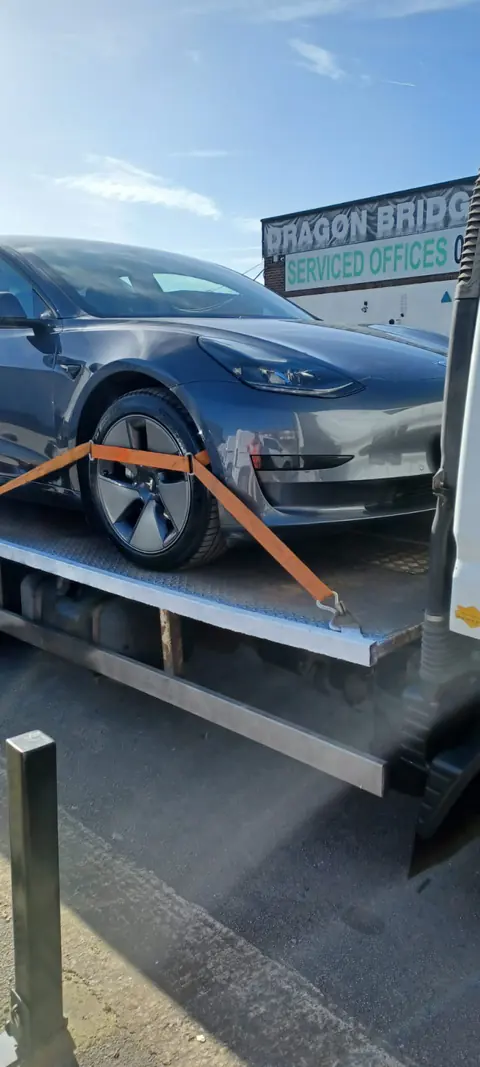
An electric car secured on a flatbed recovery truck for transport at night.
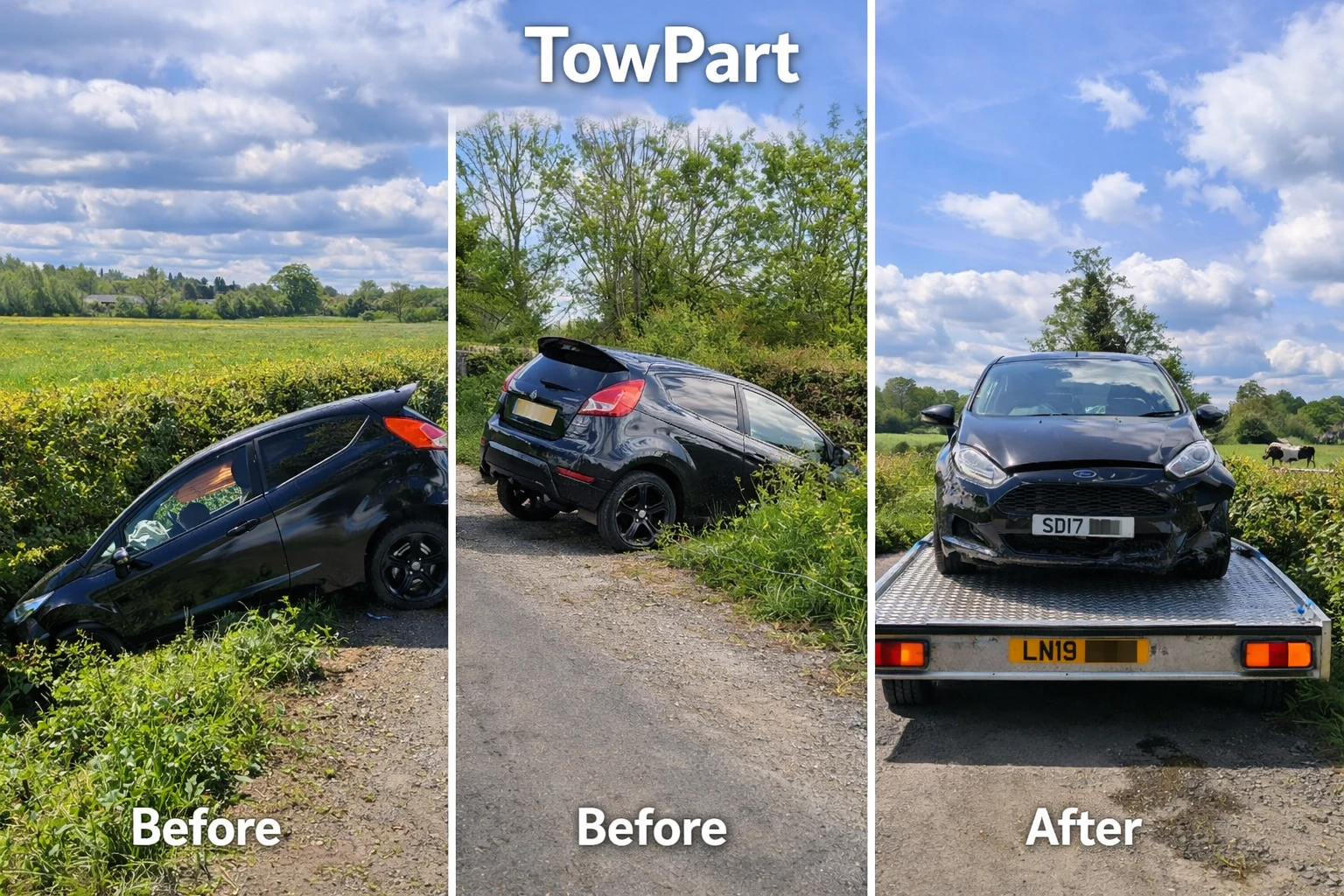
A car or van stuck in mud, a ditch, wet grass or a soft verge needs more than a tow rope and wheelspin. The vehicle position, ground, pulling angle and access route all affect the safest recovery method. A controlled professional winch pull can reduce the risk of body, suspension and underbody damage.
Stop before the vehicle sinks further
Repeated acceleration can dig the tyres deeper, build mud around the chassis and move the vehicle towards an unsafe angle. Stop if the wheels spin without progress. Switch on hazards when near a road, keep passengers away from the pulling area and do not stand near a tensioned rope or cable.
Check for immediate danger
Call emergency services if anyone is injured, the vehicle is unstable, fuel is leaking, the vehicle is in water, or it creates an immediate traffic danger. Do not enter deep or moving water to attach recovery equipment.
Photos needed for an accurate winch recovery quote
Clear images help the recovery team choose the truck, cable direction and safe approach. Send at least:
One wide photo showing the vehicle and surrounding ground
A front or rear photo showing the likely pulling direction
A side photo showing the depth, ditch angle or wheel position
A photo of the route from firm road to the vehicle
Close-ups of visible damage or buried wheels
Also share a live location or what3words reference, the distance from firm road and whether a recovery truck can approach without becoming stuck.
Information about the vehicle
State the make and model, approximate weight, transmission type, whether it starts and drives, and whether the steering and brakes work. Tell the operator if it is loaded, towing a trailer or carrying tools or goods. A loaded van can require a different recovery plan from an empty car.
Pull-out only or onward recovery?
Some vehicles only need to be returned to firm ground. Others have tyre, suspension, steering or body damage and should be transported to a garage. Decide whether you need a winch pull-out only or a pull-out followed by vehicle recovery. If transport is required, include the destination postcode in the first request.
Why the pulling angle matters
A safe recovery line should reduce sideways load and avoid dragging the vehicle into a deeper ditch or obstacle. The recovery operator considers anchor points, ground traction, cable alignment and the manufacturer-approved attachment points. Improvised towing from suspension or body parts can cause serious damage.
After the vehicle reaches firm ground
Inspect tyres, steering, brakes and the underside before driving. Mud or impact can hide damage. If there is any doubt, arrange transport rather than driving away. Browse TowPart recovery coverage or read our non-runner transport guide if the vehicle cannot continue safely.
Need a vehicle pulled out?
Send your live location, vehicle details and clear photos of the ground, access and vehicle position. We will assess the job and confirm price and availability.
Yes, subject to access, ground conditions and a safe pulling route. Send wide photos and the distance to firm ground.
How many photos should I send?+
Send at least three clear images: the overall scene, the vehicle angle and the route from the nearest firm road. More photos may be needed for damage or difficult access.
Can the vehicle be taken to a garage after the pull-out?+
Yes. Include the garage postcode when requesting the quote so pull-out and onward transport can be planned together.
Answer one simple question at a time. Our team will check the job and reply with a price and availability before you book.
A direct quote from our team
Vehicle and access details checked
No booking until you confirm
On a motorway or in immediate danger? Move to a place of safety if you can. Call 999 if anyone is at risk or the vehicle is in a live lane.
QUESTION 1 OF 205%
THE VEHICLE DICTATES THE TRUCK
Different vehicles. One capable team.
Flatbed recovery, roadside assistance and specialist transport, arranged around your vehicle’s actual condition.
Up to 12-tonne recovery trucks500+ recovery driver network. Fully insured trucks.
Recovery truck options up to 12 tonnes. This describes the recovery truck size; the vehicle weight, permitted carrying capacity and loading method are checked for every job.
TowPart-approved and trained drivers · No membership · Available 24/7
FIVE-STAR CUSTOMER FEEDBACK
Good service. In their own words.
A selection of five-star Google review screenshots shared by our recovery team. Open a card to read the supplied original.
GGoogle review
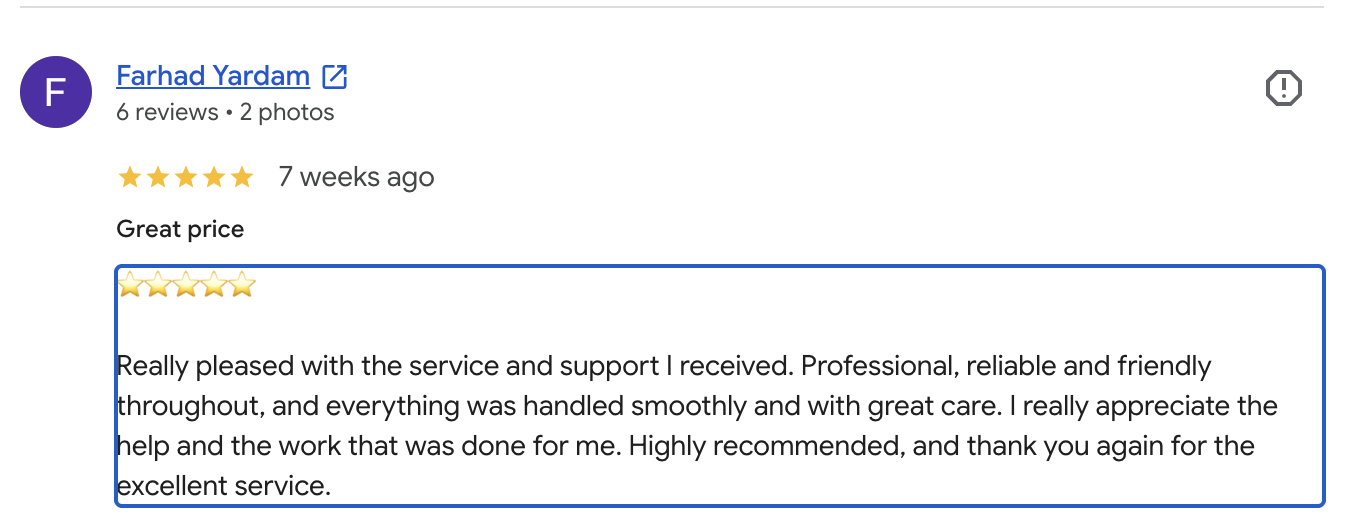
Really pleased with the service and support I received. Professional, reliable and friendly throughout, and everything was handled smoothly and with great care. I really appreciate the help and the work that was done for me. Highly recommended, and thank you again for the excellent service.
Farhad YardamView original screenshot ↗
GGoogle review
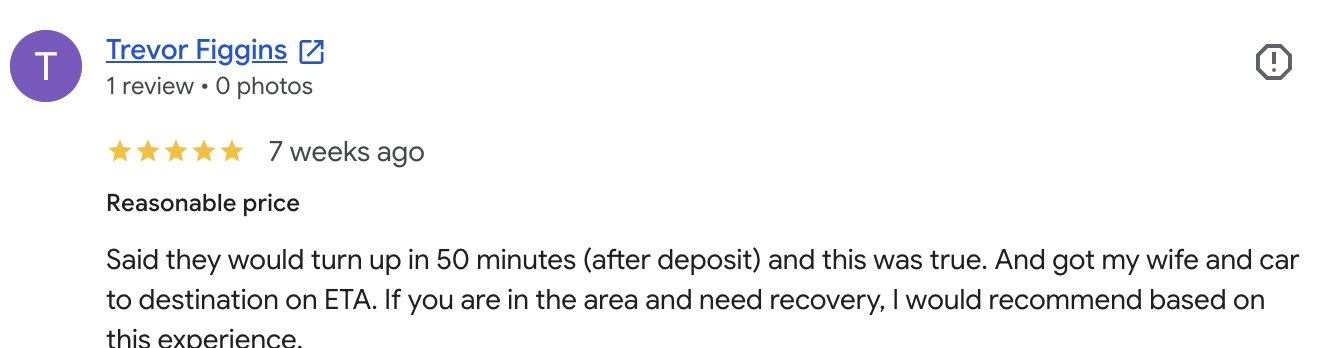
Said they would turn up in 50 minutes (after deposit) and this was true. And got my wife and car to destination on ETA. If you are in the area and need recovery, I would recommend based on this experience.
Trevor FigginsView original screenshot ↗
GGoogle review
Speedy and professional service which was very helpful especially in a time of great stress and need. Would recommend.
WordsmithsView original screenshot ↗
GGoogle review
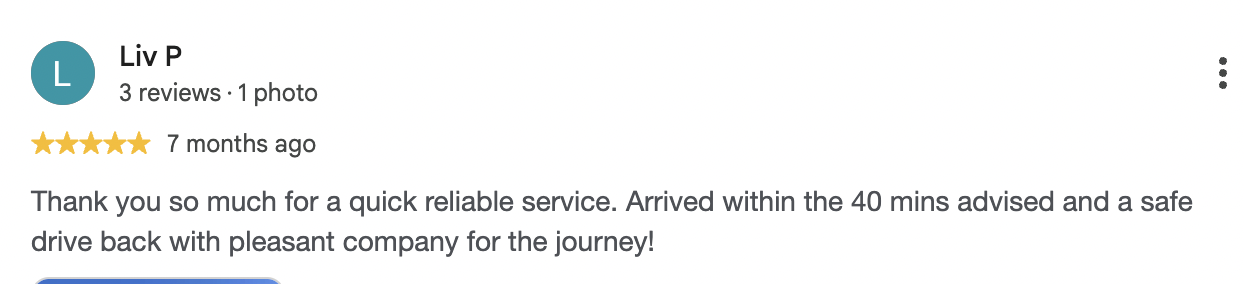
Thank you so much for a quick reliable service. Arrived within the 40 mins advised and a safe drive back with pleasant company for the journey!
Liv PView original screenshot ↗
GGoogle review
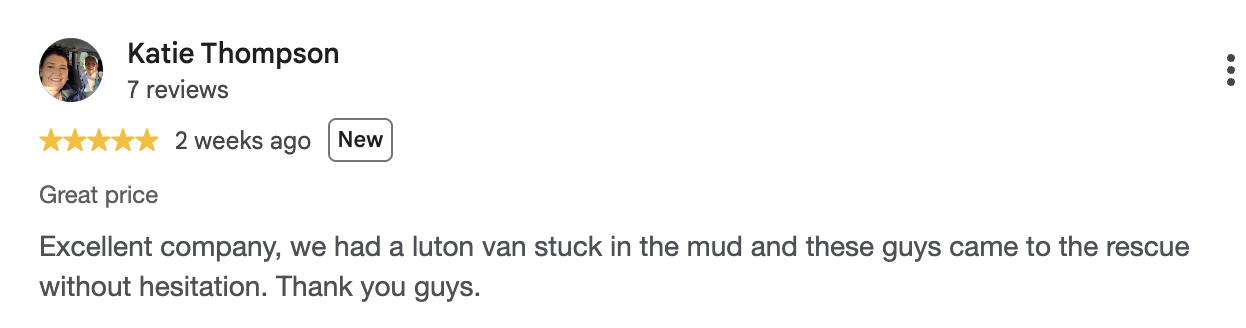
Excellent company, we had a luton van stuck in the mud and these guys came to the rescue without hesitation. Thank you guys.
Katie ThompsonView original screenshot ↗
GGoogle review
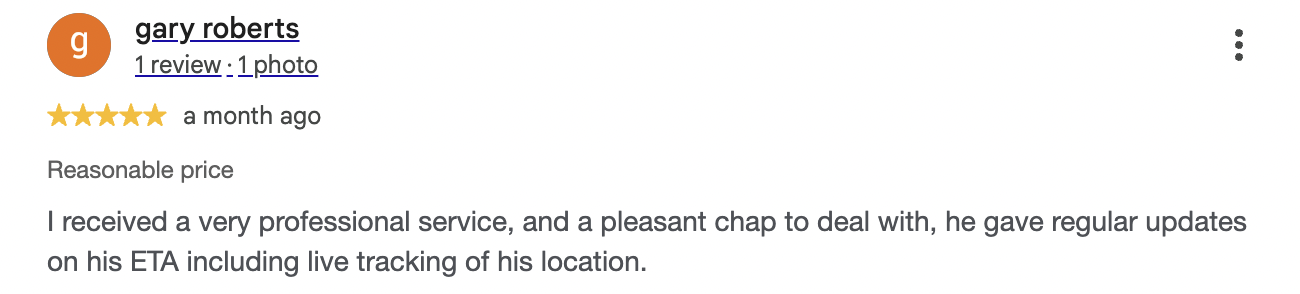
I received a very professional service, and a pleasant chap to deal with, he gave regular updates on his ETA including live tracking of his location.
gary robertsView original screenshot ↗
GGoogle review
Five-star rating
Kerry RobertsView original screenshot ↗
Individual experiences and arrival times vary by location and job. These selected reviews are not an overall Google or Trustpilot score.
PRACTICAL RECOVERY KNOWLEDGE
The details behind a well-planned recovery.
Use the sections below to understand suitable equipment, prepare the collection and make an informed booking.
01
Winch recovery from mud, verges and ditches
A stuck vehicle needs an assessment of the ground and pulling approach before a truck is sent. Supply photographs showing the whole vehicle, where the wheels sit, the surrounding terrain and the nearest firm access. Explain whether it is in mud, wet grass, a verge, a field or a ditch. Include any slope, fence, water, buried obstacle or restriction on access. A useful photograph shows the space around the vehicle as well as the vehicle itself.
Do not keep accelerating if the vehicle is sinking or moving towards an edge. The team decides whether the recovery truck can reach a safe position and whether suitable equipment is available. Landowner permission may be needed on private land. Tell us if you only need a pull-out to firm ground or if the vehicle also requires transport to a garage. If there is damage, explain it before the job is priced; pulling a vehicle free does not establish that it is safe to drive afterwards.
A recovery truck needs enough height, width and turning space to approach and load. Tell us the entrance height limit for a multi-storey or underground car park, the floor, ramp gradient and whether a barrier controls access. At a home, include gate width, driveway slope, overhanging branches and the position of other parked vehicles. Photographs taken from the entrance towards the vehicle can reveal restrictions that are difficult to describe in a message.
For a lowered, prestige or modified car, explain ground clearance, body kits and any change to suspension height. Do not remove bodywork or attempt to raise a vehicle with improvised equipment in preparation for collection. The team assesses a suitable loading approach and confirms any limitations before booking. Where a full-size truck cannot reach the vehicle directly, additional equipment or an alternative collection arrangement may be required. Give those access details early so the quote reflects the actual job rather than an assumed open-road pickup.
Starting, rolling and loading are different questions
A vehicle can fail to start yet still be straightforward to load. It may have keys, free steering, working brakes and all four wheels able to roll. Another vehicle may start but have a broken driveshaft, a damaged wheel or suspension that makes driving unsafe. Describe each function separately: whether the engine starts, whether the vehicle moves under its own power, whether the gearbox selects neutral and whether the parking brake releases. For an automatic, tell us if electrical power is still available.
Photographs are especially helpful where wheels are bent, tyres have separated, bodywork touches the ground or a steering component is damaged. Never force a gearbox, release a brake on a slope or attempt to drag the vehicle to make collection easier. The recovery driver assesses the loading method, including whether winching, wheel skates or other suitable equipment is required. Accurate information before dispatch reduces the chance of an unsuitable truck, an interrupted collection or a revised quotation.
A useful car recovery quote is a plan for the complete job. The team needs to know where the vehicle is, where it must go and how it can be loaded. Start with both postcodes, the make and model, your preferred timing and a contact number. Explain the immediate problem in everyday language. A car that has stopped outside a garage may need a different approach from one with a damaged wheel in a narrow driveway. If anything is uncertain, say so rather than guessing.
TowPart’s three-minute quote guarantee applies after complete information for a standard recovery has been received. Specialist loading, collision damage, unusual access or missing information needs individual assessment. The agreed price and truck arrival estimate are separate details: a quick quote does not mean a truck arrives in three minutes. You can review the proposed journey and decide whether to book. No annual membership is needed, and submitting a request does not commit you to a recovery.
Local collections and long-distance vehicle transport
A short collection within your area and a journey to another part of the UK both need an agreed destination. Give both postcodes at the start rather than asking for a price to move a vehicle an unspecified distance. For longer journeys, confirm the preferred date, any deadline and who will hand over keys at collection. If the vehicle is being bought or sold, establish that the person releasing it has authority and knows when collection is expected.
The receiving site must be able to accept and unload the vehicle. A garage closing before the planned arrival, a locked gate or an occupied driveway can change the delivery arrangements. Provide a contact number and explain where the vehicle should be left. Tell us if a non-runner will need pushing, winching or particular positioning after unloading. A full collection-to-delivery plan makes the quotation clearer and helps the driver complete the agreed journey without avoidable uncertainty.
The best location description combines a postcode with the actual entrance and the position of the vehicle. Around your local area, include a street name, business name, car park level or recognisable access point. A postcode can cover several buildings and may direct a large truck to the wrong gate. If the vehicle is on private land, arrange permission to enter and explain who will meet the driver. A location pin can support the written details, particularly where there is no nearby street number.
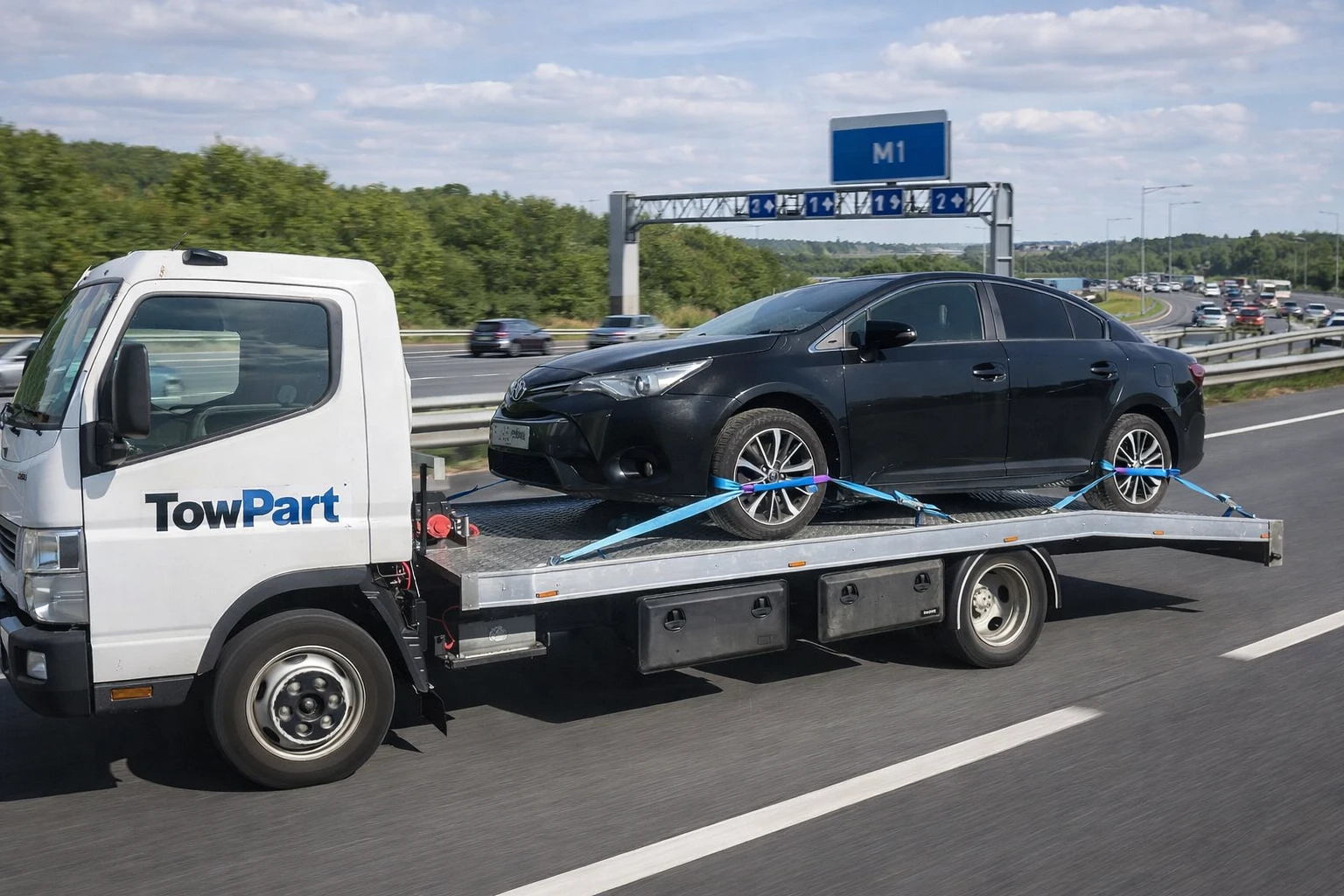
For approaches including motorway and A-road routes, include the road, direction and nearest junction or services. A truck must approach the correct side of a divided road. Do not try to cross a carriageway to meet it. Where a pickup is on a rural lane, tell us about narrow sections, soft verges, locked gates and turning space. These details help the team choose suitable equipment and give a realistic arrival estimate for your particular collection.
Choosing a flatbed or another suitable recovery truck
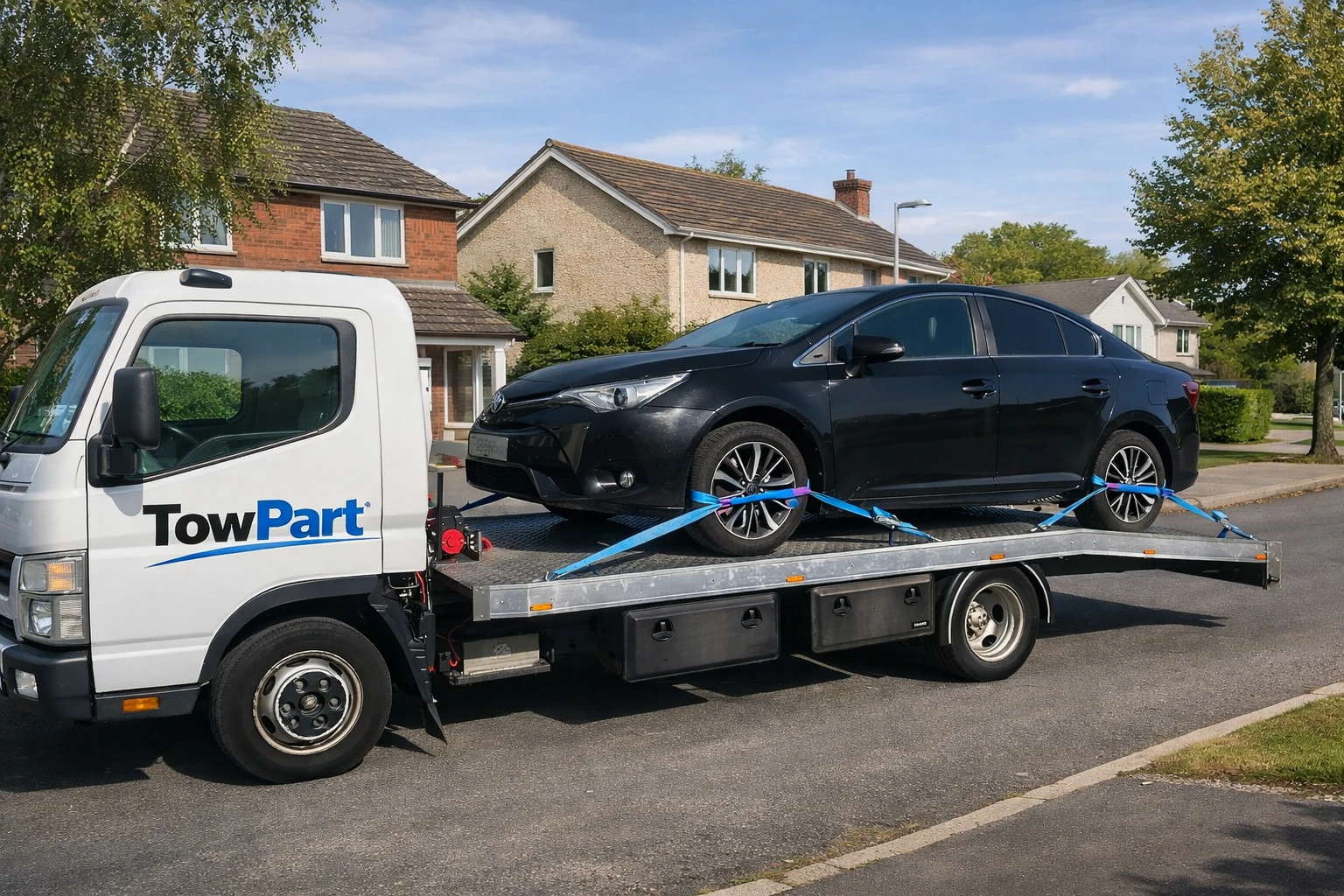
A flatbed recovery truck carries the vehicle on its load platform. This is useful for many non-running cars, electric vehicles, damaged vehicles and journeys where the recovered vehicle’s wheels should be clear of the road. Selection also depends on the vehicle’s length, width, ground clearance and weight. Tell us about modifications, a lowered body, a long front overhang or additional equipment. A photograph from the side helps explain clearance and access more accurately than a short description alone.
TowPart can arrange different tow truck and recovery options, including recovery trucks up to 12 tonnes. Truck size is not the same as the weight it can carry: suitable payload, axle limits, bed dimensions and loading equipment must be checked for the actual vehicle. A large electric SUV and a loaded van can need different equipment from a small hatchback. Share the registration and any known weight or load information so the team can assess suitability before confirming the booking.
Personal safety comes before completing an online form. If a vehicle develops a problem on a motorway, follow official instructions and reach a place of relative safety where possible. If you cannot safely leave a vehicle stopped in a live lane, keep seatbelts fastened, turn on the hazard lights and call 999. Follow police or highways instructions. The recovery enquiry can wait until the immediate risk has been dealt with; do not stand in traffic to take photographs or inspect damage.
When it is safe to arrange help, send the direction of travel, nearby junction, services, marker post or emergency area identifier. Explain whether a road authority is already managing the incident and whether the vehicle has been moved to a safer location. Give the destination postcode and the number of people who need onward arrangements. Keep your phone available for updates. A private recovery booking does not replace emergency assistance or permission required to leave an emergency area.
Jump starts and flat battery assistance in your area
A clicking ignition, dim dashboard or vehicle left unused can suggest a low-voltage battery problem, but a jump start is not the right answer to every non-start. Tell us whether the engine cranks, whether the dashboard powers on and which warnings are displayed. Include the make, model, fuel type and whether the bonnet can be opened. If the battery is damaged, leaking, unusually hot or giving off a strong smell, stop attempts to start the vehicle and explain the symptoms to the team.
A TowPart-approved technician checks suitable battery assistance against the vehicle’s requirements. Some vehicles have specific connection points or electronic systems that need particular care. A hybrid or electric car can have a low-voltage supply fault even when its main battery has charge. If starting assistance is unsuitable or does not resolve the fault, discuss onward recovery to a garage. Any different service and its price should be agreed before work proceeds; do not assume a boost can repair a mechanical or charging-system problem.
For Tesla recovery and other electric vehicle transport, give the exact model, registration and reason it needs moving. Explain the state of charge where known, whether low-voltage power is available, whether a recognised key is present and whether the car can enter its manufacturer’s transport mode. A depleted traction battery is different from a low-voltage fault. A damaged electric vehicle may also need specialist assessment before handling. Never touch exposed high-voltage components or try an improvised towing method.
The recovery method follows the manufacturer’s instructions for the particular model and year. Tesla’s Model 3 transporter guidance specifies keeping all four tyres off the ground and recommends a flatbed. Its Tow Mode is for limited loading or repositioning, rather than general towing on the road. Other electric vehicles have their own requirements. Tell the team about a locked charge cable, inaccessible controls, collision damage or wheels that will not turn so appropriate loading equipment can be planned in advance.
A van recovery quote needs more than the badge on the front. The wheelbase, roof height, body type and load influence the equipment required. State whether it is short, medium or long wheelbase, a high-roof panel van, a Luton or a vehicle with a tail lift. Tell us whether it is empty or carrying tools, stock, equipment or a conversion. A side photograph and the registration help the team assess dimensions and suitable recovery capacity.
For a business vehicle, confirm where it should be delivered and whether the receiving depot or workshop will be open. Arrange access to keys and tell us about any load that may need separate handling. Do not remove heavy goods at an unsafe roadside location simply to make a van lighter. If a commercial vehicle has damaged running gear, locked wheels or a box body close to the ground, share clear photographs. The loading plan and quotation should reflect the van as it actually stands.
Motorcycles need appropriate support and securing during transport. Provide the make, model, approximate size, steering-lock status and whether the bike rolls. Explain damage to wheels, forks, handlebars, bodywork or stands, and say whether it has been dropped or involved in a collision. A road bike, scooter, touring motorcycle and modified machine can present different loading requirements. Photographs help the team choose suitable equipment instead of treating every two-wheel vehicle as the same job.
Confirm the collection surface and the space available beside the bike. A narrow alley, steep ramp or underground parking area may need a different approach from an open driveway. Tell us whether keys are available and whether someone can authorise collection at both ends. The driver determines the suitable loading and securing method. Do not rely on the side stand alone as a transport arrangement, and do not attempt to ride a damaged motorcycle merely to reach a more convenient pickup point.